
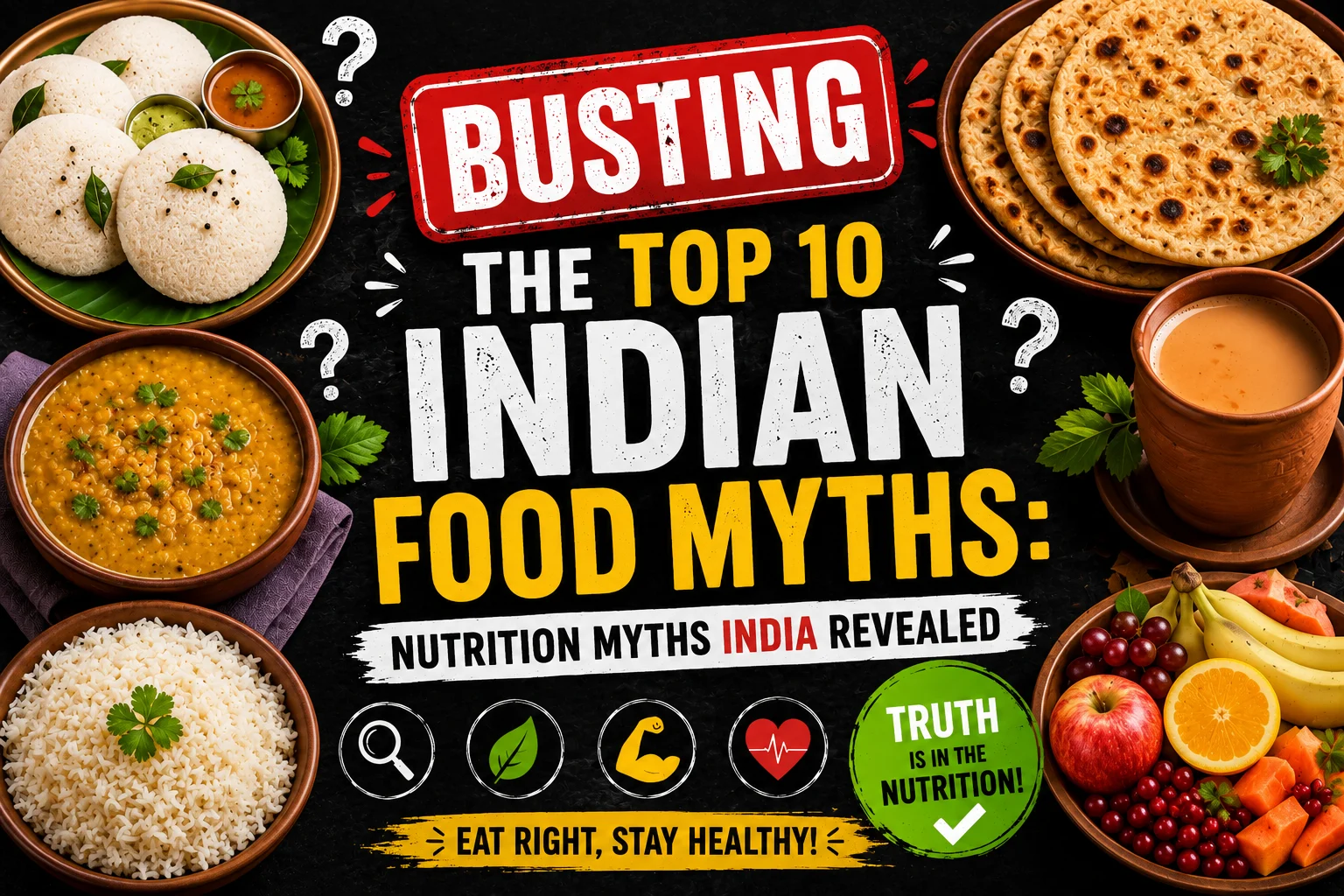
Busting the Top 10 Indian Food Myths: Nutrition Myths India Revealed
Indian cuisine is celebrated globally for its rich flavors, vibrant spices, and healthful ingredients. Yet, it’s often entangled in misconceptions that discourage many from exploring its true nutritional potential. In this myth-buster article, we debunk the 10 most common Indian food myths and replace them with evidence-based food facts India lovers should know.
Common Misconceptions About Indian Food
1. Myth: Indian Food Is Always Unhealthy and Oily
Contrary to this notion, traditional Indian cooking uses minimal oil when done correctly. Many dishes feature steaming, grilling, or sautéing with heart-healthy oils like mustard or olive oil. Incorporating dal, vegetables, and lean proteins moderates overall fat content.
2. Myth: Spices Are Merely for Heat and Not Nutrition
Spices such as turmeric, cumin, and coriander are potent antioxidants and anti-inflammatory agents. Turmeric’s active compound, curcumin, is linked to improved digestion and reduced inflammation—clear examples of crucial food facts that India brings to nutritional science.
3. Myth: Carbs in Indian Breads Cause Weight Gain
Whole wheat rotis, millet-based bajra or jowar breads, and hand-patted breads are richer in fiber and micronutrients. They have a lower glycemic index compared to white bread, supporting steady energy release and satiety.
4. Myth: Vegetarian Indian Diets Lack Complete Protein
Combining lentils (dal) with rice or flatbreads creates a complete amino acid profile. Paneer (cottage cheese), yogurt, legumes, and nuts further bolster protein intake, making vegetarian meals nutritionally balanced.
5. Myth: Indian Sweets Are Pure Sugar Bombs
Traditional sweets like besan laddoo or date-jaggery rolls often use natural sweeteners and nutrient-rich ingredients like chickpea flour, nuts, and dried fruits. Moderation is key, and these treats can fit into a balanced diet.
6. Myth: Curry Equals Creamy, Fat-Laden Sauces
Authentic curries often rely on pureed vegetables, coconut milk, or yogurt rather than heavy cream. Tomato-based gravies use minimal oil, and spice blends provide depth without added calories.
7. Myth: Pickles and Chutneys Are Too Salty and Unhealthy
Homemade pickles and chutneys can be made with reduced salt, no preservatives, and additional nutrients from raw mangoes, tamarind, or fresh herbs. They offer probiotic benefits when fermented properly.
8. Myth: Indian Street Food Is Always Unsafe or Unhygienic
While hygiene standards vary, many street vendors follow strict cleanliness practices. Popular street items like steamed momos or dosa are nutritious and prepared fresh. Choosing busy stalls with high turnover reduces safety concerns.
9. Myth: Eating Rice Causes Blood Sugar Spikes
Opting for brown rice, red rice, or parboiled varieties lowers the glycemic index, allowing for gradual glucose release. Pairing rice with protein, fiber, or healthy fats further blunts blood sugar responses.
10. Myth: Indian Food Is Only for South Asian Palates
The global appeal of butter chicken, biryani, samosas, and masala chai proves otherwise. Fusion recipes and customizable spice levels make Indian cuisine accessible and enjoyable for diverse taste preferences.
Embracing Evidence-Based Food Facts India Offers
Understanding the nutritional science behind Indian ingredients helps dismantle nutrition myths India commonly spreads. From the healing power of spices to balanced macro profiles in plant-based meals, Indian food myths fall flat under scrutiny. By exploring authentic recipes and embracing mindful cooking methods, you can harness both flavor and health benefits.
Conclusion
Indian cuisine is more than curries and naan—it’s a versatile, healthful collection of dishes rooted in centuries of culinary wisdom. Next time you hear a claim about Indian food, refer to these debunked myths and discover the real food facts India has to offer.
Also Read: