
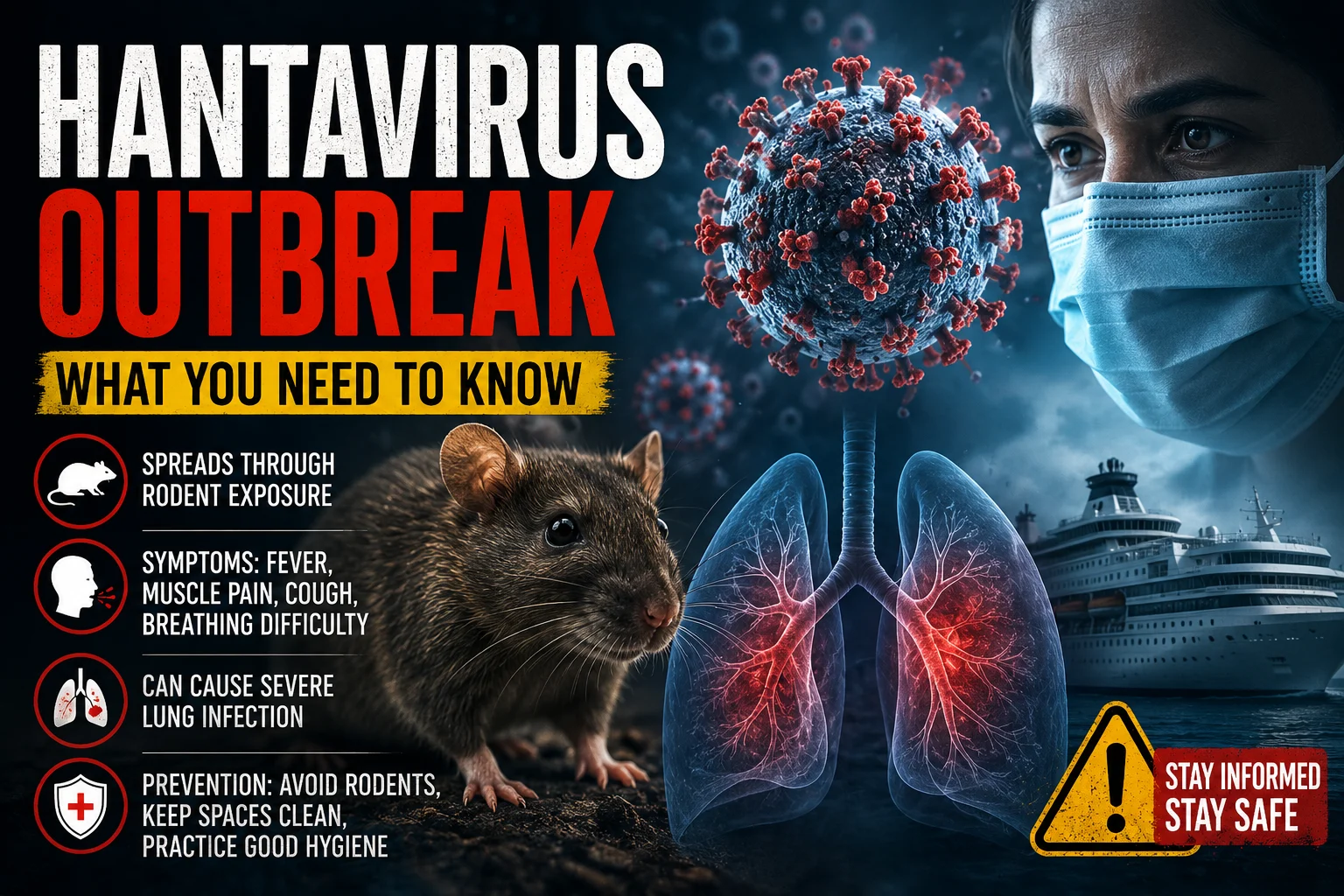
Hantavirus Outbreak Raises Global Concern: What You Need to Know About the Rare Rodent-Borne Virus
Key Highlights
- Recent Hantavirus cases linked to a cruise ship outbreak have raised global attention
- The virus is primarily spread through rodent exposure, not human transmission
- The Andes strain may allow rare human-to-human spread
- Symptoms can escalate quickly, especially affecting the lungs
- Health agencies confirm low risk of a global outbreak or pandemic
Hantavirus Outbreak Sparks Global Attention After Cruise Ship Cases
A rare but serious virus has recently entered global headlines. The Hantavirus outbreak linked to a cruise ship cluster has triggered international monitoring after multiple infections and reported deaths.
While experts emphasize that this is not a pandemic-level threat, the incident has raised awareness about how zoonotic diseases—those transmitted from animals to humans—can emerge unexpectedly.
According to the World Health Organization (WHO) outbreak update, health authorities are actively tracking confirmed cases and contacts associated with the outbreak.
What Is Hantavirus?
Hantavirus is a group of viruses carried mainly by rodents such as rats and mice. Humans become infected when they inhale or come into contact with contaminated rodent waste.
The virus can lead to Hantavirus Pulmonary Syndrome (HPS), a serious condition that affects the lungs and breathing.
According to the CDC Hantavirus Overview, the infection is rare but potentially life-threatening if not treated early.
How Does Hantavirus Spread?
Health experts identify the following primary transmission routes:
- Inhaling air contaminated with rodent urine or droppings
- Touching contaminated surfaces and then touching the face
- Rare cases of infection through rodent bites
What makes the current situation unique is the Andes strain, which has shown limited human-to-human transmission in close contact scenarios.
The European Centre for Disease Prevention and Control (ECDC) notes that such transmission remains uncommon but is being closely monitored.
Symptoms of Hantavirus Infection
Early symptoms often resemble flu, which can delay detection:
- Fever and chills
- Muscle aches
- Fatigue
- Headaches
- Nausea
In severe cases, it can progress to:
- Shortness of breath
- Lung complications
The Mayo Clinic Hantavirus Guide highlights how quickly symptoms can worsen once the lungs are affected.
Latest Updates on the Outbreak
The recent cluster has drawn global attention due to its unusual setting and transmission concerns.
Health agencies report:
- Multiple confirmed infections
- Suspected close-contact transmission cases
- Ongoing contact tracing and monitoring
Despite this, authorities continue to state that the overall public health risk remains low.
Is Hantavirus Dangerous?
Hantavirus can be serious, but it is also rare.
Experts emphasize:
- It does not spread easily between humans
- Most infections are linked to environmental exposure
- There is no evidence of widespread community transmission
The WHO Hantavirus Information confirms that prevention mainly focuses on avoiding rodent exposure.
How to Protect Yourself
Simple preventive steps include:
- Keeping living spaces clean and rodent-free
- Wearing gloves and masks while cleaning dusty areas
- Avoiding direct contact with rodent droppings
- Disinfecting surfaces before cleaning
Conclusion
The recent Hantavirus outbreak serves as a reminder of how quickly rare infections can capture global attention. However, current evidence suggests that this is not a widespread threat.
With proper awareness, hygiene, and preventive measures, the risks can be effectively managed.
Frequently Asked Questions (FAQs)
1. What causes Hantavirus?
Hantavirus is caused by viruses carried mainly by infected rodents.
2. Can Hantavirus spread between humans?
Most strains cannot. The Andes strain shows rare human-to-human transmission.
3. Is Hantavirus similar to COVID-19?
No. It spreads differently and is far less contagious.
4. What are the early symptoms of Hantavirus?
Fever, fatigue, muscle pain, and headaches are common early signs.
5. How can I prevent Hantavirus infection?
Avoid rodent exposure, maintain hygiene, and clean contaminated areas safely.
Read More:
- Nipah Virus: A Comprehensive Guide to the Deadly Pathogen
- Understanding Dengue: Causes, Symptoms, Prevention, and FAQs